Technical Details
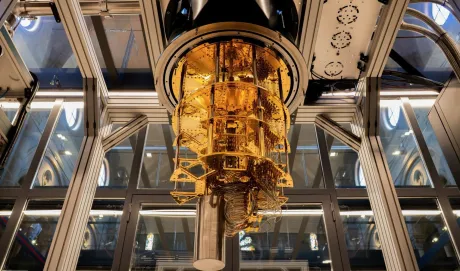
The new system will be fully integrated into the existing MareNostrum 5 supercomputer. The 9.8 million euro project was funded by the European Union and the Spanish State Secretariat for Digitalization and Artificial Intelligence, and the design and assembly were carried out by the local company Qilimanjaro Quantum Tech.
Context and Background
Creating and supporting its own European systems is a strategic step towards achieving digital independence for the region. The Catalan Minister of Research and Universities, Nuria Montserrat, commented on the event: «Thanks to the technologies developed here, in the supercomputing center, with the support of Catalan and Spanish state policy and in partnership with Europe, we are able to produce our own European technologies. This is the path to strategic autonomy, so as not to depend on third countries».
Industry Impact
The new machine is located in the Torre Girona chapel, which has historically been the home of the previous four generations of MareNostrum systems. The main technological difference of the third computer is that it is analog, while the two previous nodes were digital. The industry is divided between these approaches due to their specificity. Digital quantum computers work similarly to classical PCs. They are universal, flexible in programming, and can run a wide range of quantum algorithms, but they quickly accumulate «noise» and require a complex error correction system. Analog quantum computers work differently — they project mathematical problems onto real physical quantum states and allow them to evolve over time. Such systems are ideal for solving complex physics and chemistry problems.