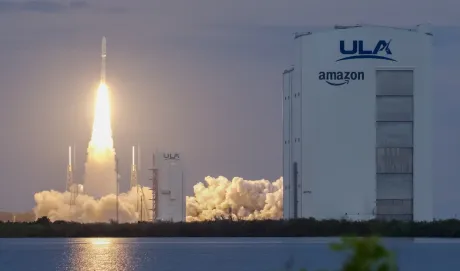
Atlas V 551 Rocket Launch
The United Launch Alliance (ULA) Atlas V 551 rocket launched from Cape Canaveral's SLC-41, successfully deploying 29 Amazon Leo communication satellites into low Earth orbit. Designated AV-113, this mission marks the 109th Atlas V launch and the 22nd in the 551 configuration with five solid rocket boosters.
Amazon Leo and Starlink Competition
Amazon has contracted 47 launches with ULA: 38 Vulcan rockets and nine Atlas 5s. Due to Vulcan delays, two prototype satellites (formerly Project Kuiper) were launched in 2023 via the Protoflight mission using an Atlas 5. The project aims to build a constellation of over 3,200 satellites to provide high-speed internet in remote regions, directly competing with SpaceX's Starlink.
Delays and Incidents
The Vulcan rocket remains grounded since February 2024 after a solid booster nozzle failure during the USSF-87 mission. After the LA-07 launch, Amazon will have one remaining Atlas 5. Earlier, Blue Origin's New Glenn rocket faced a serious incident during pre-launch tests at Cape Canaveral, underscoring industry challenges.
Industry Impact
Amazon's satellite initiative drives innovation in global internet access but faces technical and logistical hurdles. Delays in rival rocket programs and recent accidents emphasize the need for improved reliability in space systems.