Technical Details
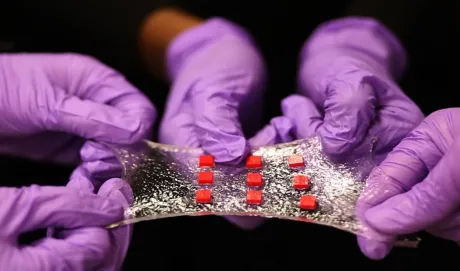
A team of researchers from Harbin Institute of Technology (China) has developed a stretchable hydroelectric generator that can generate electricity even when subjected to multiple bending, stretching, and twisting. Image: Melanie Gonick/MIT Hydrogel-based generators that convert environmental moisture into electricity have long attracted the attention of scientists due to their softness and flexibility. Such devices are considered a promising source of power for smart clothing, medical implants, and various health sensors.
Context and Background
However, existing solutions face a serious problem - weak adhesion between the hydrogel and electrodes. When deformed, the materials begin to peel off from each other, increasing internal resistance and impairing device performance.
Industry Impact
Chinese engineers solved this problem by modifying the composition of the hydrogel. They added a water-glycerin solvent and combined the material with liquid metal and elastic silver electrodes. According to the researchers, the addition of glycerin contributed to the formation of a larger number of hydrogen bonds within the hydrogel and at the interface with the electrodes. This improved the adhesion between the layers, reduced resistance, and facilitated ion transport even under significant mechanical deformations.